When It Is Already Too Late to Appeal the Territorial Recruitment Center's Mobilization Order: The Supreme Court Confirmed the Application of the One-Month Deadline


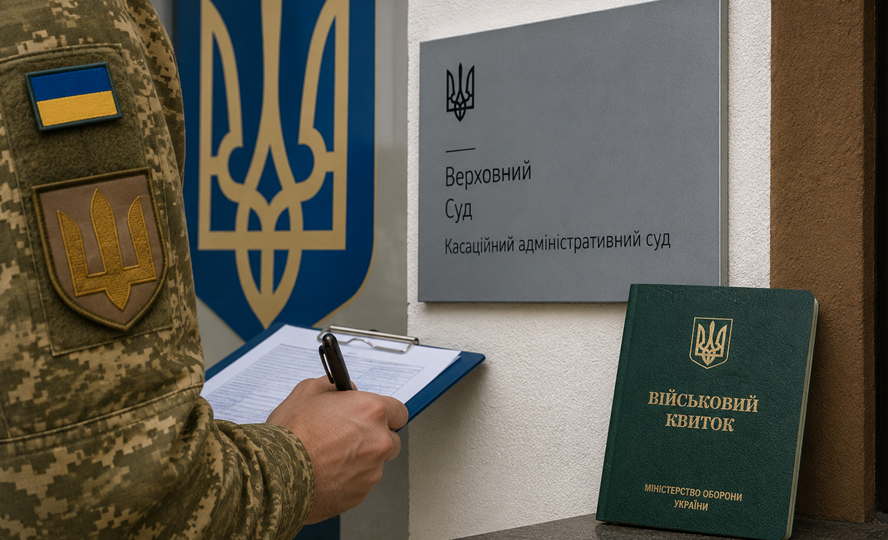










The Supreme Court, sitting as the Administrative Cassation Court, reviewed a cassation appeal in a case concerning the appeal of orders from the territorial recruitment center and military units regarding the conscription of a citizen for military service during mobilization, his enrollment in a military training unit, subsequent transfer, and military service.
The court examined the correctness of the conclusions of the lower courts, which returned the claim due to the expiration of the statutory deadline for filing an administrative lawsuit, and resolved the issue of which deadline applies to disputes concerning the appeal of decisions related to mobilization and military service.
Circumstances of the Case
The plaintiff filed a lawsuit with the administrative court against the territorial recruitment and social support center and two military units, considering illegal the decisions and actions that led to his mobilization, assignment to military service, enrollment in the personnel lists of military units, and further military service.
In the lawsuit, he requested to recognize as unlawful and cancel the order of the head of the territorial recruitment center on conscription for military service during mobilization regarding his conscription and assignment to a military training unit.
Additionally, the plaintiff requested to cancel the order of the commander of the military training unit on his acceptance for military service by conscription during mobilization, appointment as a cadet of the training platoon, enrollment in the personnel lists, and all types of provision.
He also appealed the order of the commander of the military training unit on his exclusion from the personnel lists of this unit and his transfer according to the General Staff's distribution to another military unit.
Separately, the orders of the commander of another military unit were appealed regarding the plaintiff's enrollment in the reserve, placement on all types of provision, subsequent exclusion from the reserve, appointment to the military position of operator, and inclusion in the personnel lists of the military unit.
Besides canceling the mentioned orders, the plaintiff requested to oblige the commander of the military unit to exclude him from the personnel lists.
Justifying the claims, the plaintiff stated that the territorial recruitment center illegally mobilized him, as a result of which all subsequent decisions of the military units regarding his acceptance for service, transfer, and service are also illegal since they derive from the initial conscription decision during mobilization.
The courts established that the citizen was brought by police officers to the territorial recruitment center for a military-medical commission.
After that, the head of the territorial recruitment center issued an order on his conscription for military service during mobilization and assignment to the military training unit.
By the order of the commander of the military training unit, the plaintiff was accepted for military service by conscription during mobilization, appointed as a cadet of the training unit, enrolled in the personnel lists, and provided with all types of provision.
Subsequently, by the order of another military unit, he was enrolled in the reserve of this unit and transferred to the commander's disposal.
Disagreeing with these decisions, the plaintiff applied to the administrative court demanding to recognize the respective orders unlawful and cancel them, considering the mobilization illegal.
Decisions of the Courts of First and Appeal Instances
The Zhytomyr District Administrative Court by its ruling dated January 10, 2025, left unchanged by the decision of the Seventh Administrative Court of Appeal dated March 17, 2025, found the reasons for restoring the deadline for filing the claim disrespectful and returned the claim.
The courts concluded that the dispute is related to the performance of public service since it concerns conscription for military service during mobilization. Therefore, a special one-month deadline for filing an administrative lawsuit, as provided by part five of Article 122 of the Code of Administrative Procedure of Ukraine, applies.
The courts noted that the countdown of this deadline began on August 16, 2024—the day the order on conscription for military service during mobilization was issued, which the plaintiff identified as the main subject of the appeal. The claim was filed only on November 19, 2024, i.e., after the expiration of the statutory deadline.
Justifying the motion for its restoration, the plaintiff's representative argued that the general six-month deadline should apply to the dispute and referred to the plaintiff's military service, which allegedly complicated timely court appeal.
The courts rejected these arguments, noting that military service is a type of public service, and the plaintiff knew about all the appealed orders from the moment of conscription. Moreover, the mere fact of military service does not confirm the existence of objective and insurmountable obstacles to timely court appeal.
Due to the expiration of the one-month deadline without valid reasons, the court of first instance, whose conclusions were agreed upon by the appellate court, returned the claim in accordance with Articles 123 and 169 of the Code of Administrative Procedure of Ukraine.
Legal Conclusions of the Supreme Court Administrative Cassation Court
Reviewing case No. 240/23206/24, the Supreme Court noted that the subject of cassation review is the correctness of the application of procedural law norms by the lower courts when deciding on compliance with the deadline for filing an administrative lawsuit.
The court emphasized that the Code of Administrative Procedure of Ukraine establishes a general six-month deadline for filing an administrative lawsuit, but for disputes regarding the acceptance of citizens for public service, its performance, or dismissal, a special one-month deadline is provided. Since military service is a type of public service, disputes concerning the appeal of orders on conscription during mobilization and derivative orders on military service fall under part five of Article 122 of the Code of Administrative Procedure of Ukraine.
The Supreme Court agreed with the lower courts' conclusion that the countdown of this deadline began when the plaintiff learned about the issuance of the appealed orders. The plaintiff was conscripted for military service, enrolled in the personnel lists of military units, took the military oath, and was transferred to another military unit, thus objectively knowing about the decisions he later appealed in court.
The panel of judges emphasized that the start of the procedural deadline is linked not only to the actual awareness of the person about the violation of their rights but also to the moment when they should have become aware of such violation. Procedural deadlines ensure legal certainty in public-law relations, and their non-compliance entails procedural consequences defined by law.
The Supreme Court agreed with the conclusion about the absence of valid reasons for missing the deadline for court appeal. The court noted that such reasons can only be objective and insurmountable circumstances that genuinely prevented timely court appeal and are confirmed by proper evidence. The mere fact of military service after mobilization is not sufficient grounds for restoring the deadline. Moreover, the plaintiff's interests were represented by a lawyer, with whom a contract was concluded before the issuance of the mobilization order, indicating the possibility of timely realization of the right to judicial protection.
The court also rejected the appellant's reference to the Supreme Court's legal conclusions in another case, as its factual circumstances were not similar to the disputed legal relations. At the same time, the court recalled its own legal position, according to which the right to deferment from conscription must be exercised by the conscript before acquiring the status of a serviceman.
Separately, the Supreme Court noted that establishing procedural deadlines does not limit a person's right to access justice but aims to ensure legal certainty in public-law relations, which corresponds to the practice of the Constitutional Court of Ukraine and the European Court of Human Rights.
In view of the above, the Supreme Court concluded that the courts of first and appeal instances correctly applied procedural law norms, reasonably refused to restore the deadline for court appeal, and lawfully returned the claim. The cassation appeal was dismissed, and the decisions of the lower courts remain unchanged.
The ruling enters into legal force from the date of its adoption, is final, and not subject to appeal.
Subscribe to our Telegram channel t.me/sudua and to Google News SUD.UA, as well as to our VIBER and WhatsApp, Facebook page and Instagram to stay informed about the most important events.