Does the Territorial Recruitment Center have the right to contact the police if a conscripted person did not appear for a summons


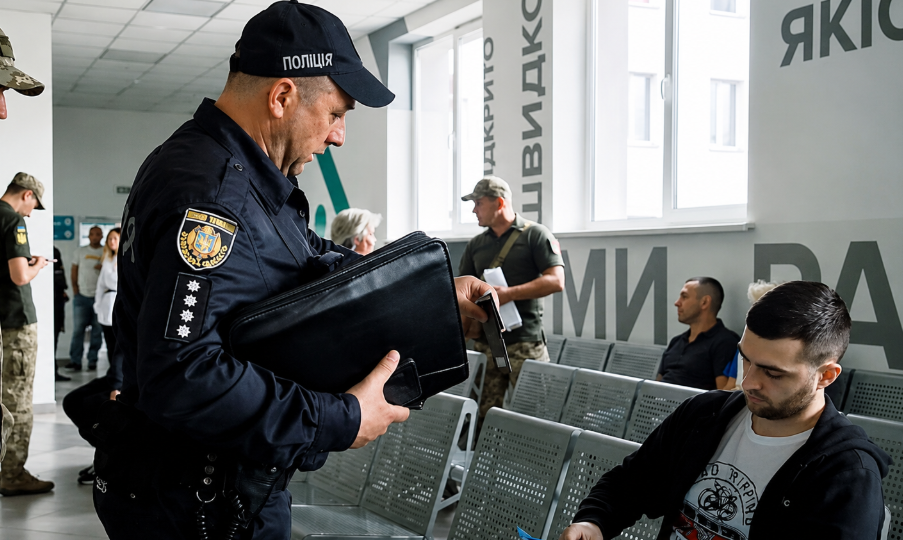










The Third Administrative Court of Appeal concluded that a confirmed fact of a conscripted person's failure to appear for a summons gives the Territorial Recruitment Center grounds to contact the National Police with a request to bring the person in for drawing up a protocol on an administrative offense. At the same time, the absence of a protocol or ruling in the administrative offense case at the time of such a request does not in itself indicate the illegality of the actions of the Territorial Recruitment and Social Support Center.
The panel of judges overturned the decision of the court of first instance, which supported the plaintiff, and dismissed the claim. The appellate court emphasized that the legislation explicitly provides for the possibility of the Territorial Recruitment Center contacting the police specifically to bring in a person for the purpose of drawing up a protocol on an administrative offense if it is impossible to draw it up on the spot.
Circumstances of the case
The conscripted person went to court after learning from a response to a lawyer's inquiry that the Territorial Recruitment Center had sent an electronic request to the National Police to bring him in for drawing up a protocol under Articles 210 and 210-1 of the Code of Administrative Offenses.
According to the Territorial Recruitment Center, the man was summoned by a summons to clarify military registration data, but he did not appear on the specified day. Due to this, the Territorial Center sent a request to the police to bring in the person who, according to the Territorial Recruitment Center, violated military registration rules. At that time, the protocol on the administrative offense had not yet been drawn up, and no ruling on administrative liability had been issued.
The plaintiff considered these actions illegal. He argued that no protocol on the administrative offense had been drawn up against him, he was not informed about the date, time, and place of the case hearing, and he had timely clarified his military registration data, which, according to him, is confirmed by the military registration document data in the "Reserve+" app. Therefore, in his opinion, there were no grounds for sending a request to the police.
What the court of first instance decided
The Dnipropetrovsk District Administrative Court agreed with the plaintiff's arguments.
The court recognized the actions of the Territorial Recruitment Center in sending a request to the police as illegal and obliged the Territorial Center to inform the Main Directorate of the National Police about the absence of grounds for administrative detention and bringing in the plaintiff.
Why the appellate court overturned this decision
The Third Administrative Court of Appeal reached the opposite conclusion.
The panel of judges noted that paragraph 79 of the Procedure for organizing and maintaining military registration, approved by the Cabinet of Ministers Resolution No. 1487, explicitly grants the Territorial Recruitment Center the right to contact the National Police to bring in persons who committed administrative offenses under Articles 210 and 210-1 of the Code of Administrative Offenses if it is impossible to draw up the protocol on the spot. It is for this purpose that the person is brought to the Territorial Recruitment Center.
The court also noted that the Territorial Recruitment Centers are not authorized to carry out administrative detention. Such powers are granted exclusively to the National Police, which acts upon the request of the Territorial Recruitment and Social Support Center.
Why the absence of a protocol was not decisive
One of the plaintiff's key arguments was that the protocol on the administrative offense against him had not yet been drawn up.
The appellate court noted that the request to the police is made to bring the person to the Territorial Recruitment Center for the purpose of drawing up such a protocol. Therefore, the absence of a protocol at the time of sending the request does not indicate the illegality of the Territorial Center's actions.
The panel of judges emphasized that the court of first instance mistakenly linked the legality of contacting the police with the fact of an already drawn-up protocol, although the legislation provides a different mechanism: first bringing in the person, and only then drawing up the protocol on the administrative offense.
The significance of failure to appear for the summons
The appellate court established that the case materials confirm the fact of the plaintiff's failure to appear at the Territorial Recruitment and Social Support Center on the day and time specified in the summons.
The court noted that a conscripted person is obliged to appear at the Territorial Recruitment Center upon summons. If the person cannot do so, they must notify the Territorial Center of the reasons for non-appearance no later than three days after the date specified in the summons and subsequently appear within a period not exceeding seven calendar days. These requirements are provided for in part three of Article 22 of the Law "On Mobilization Preparation and Mobilization."
It was precisely the fact of failure to appear for the summons, confirmed by the case materials 160/26756/25, that the appellate court recognized as sufficient grounds to conclude that the Territorial Recruitment Center acted within the powers granted to it by law when it contacted the National Police to bring in the plaintiff for drawing up the protocol.
Conclusion of the appellate court
The panel of judges concluded that the Territorial Recruitment Center's request to the National Police was made within the powers defined by the Law of Ukraine "On Mobilization Preparation and Mobilization" and Procedure No. 1487, and therefore is not illegal. Accordingly, there were no grounds to oblige the Territorial Recruitment Center to inform the police about the absence of grounds for administrative detention and bringing in the plaintiff.
In this regard, the appellate court satisfied the Territorial Recruitment Center's appeal, overturned the decision of the Dnipropetrovsk District Administrative Court, and made a new decision to dismiss the claim.
Subscribe to our Telegram channel t.me/sudua and to Google News SUD.UA, as well as to our VIBER and WhatsApp, our page on Facebook and on Instagram to stay informed about the most important events.