Solar Power Plant for Business: How to Properly Keep Records and What Documents Are Needed


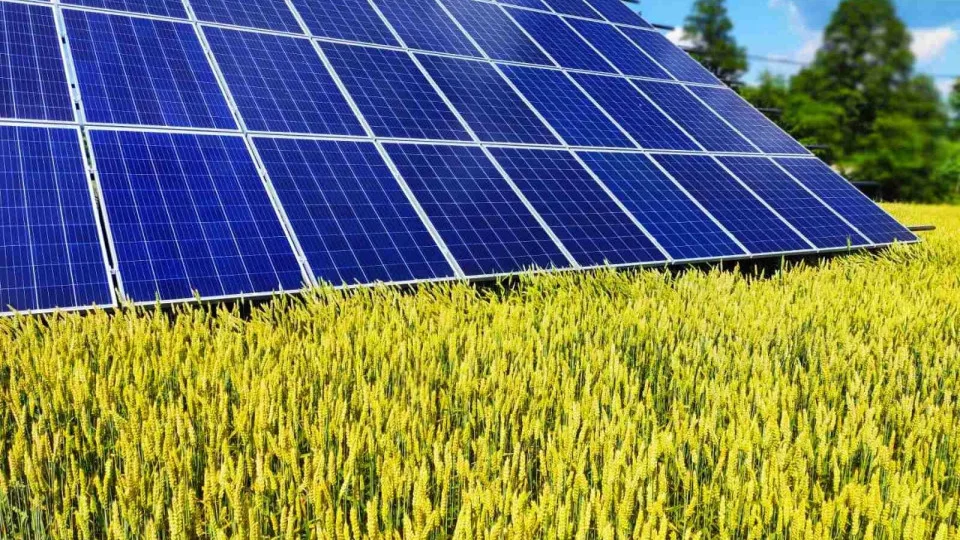










Due to blackouts faced by businesses during the war, many enterprises began seeking alternative energy sources. One such option became the installation of solar power plants (SPPs). The main components of an SPP are solar panels or batteries that work together with other equipment, such as inverters, charge controllers and meters. For enterprises, properly accounting for and taxing the acquisition of such a system is crucial.
For accounting purposes, a solar power plant is a fixed asset, as defined by paragraphs 3 and 4 of National Accounting Standard 7 "Fixed Assets," approved by the order of the Ministry of Finance of Ukraine dated April 27, 2000, No. 92.
According to NAS 7, a fixed asset can be:
- a completed device with all accessories and attachments;
- a structurally separate item intended to perform certain independent functions;
- a separate complex of structurally connected items that have common accessories, attachments, controls, and a single foundation;
- another asset that meets the definition of fixed assets.
An enterprise may recognize each part of the SPP as a separate object if it has a different useful life.
The head of the enterprise makes the final decision on the accounting method. They must consider the conclusions of the commission on the commissioning of fixed assets and the materiality of expenses, as well as issue the appropriate order.
The fixed assets accounting commission must consider the technical characteristics of the solar power plant and its type — ground-mounted or rooftop.
The initial cost of the solar power plant includes expenses related to bringing the object to a condition suitable for use.
According to paragraphs 7 and 8 of NAS 7, such expenses include:
-
the cost of design work;
-
installation and assembly of equipment;
-
commissioning of the station;
-
services directly related to preparing the object for operation;
-
connection to the power grid;
-
registration of the "green" tariff.
For the legal use of an SPP, the enterprise must have technical documentation for the equipment, manufacturer's certificates of conformity, and documents confirming ownership of the land or building.
If solar panels are installed on the roof, permission from all co-owners of the building is required. If the roof structure changes, a suitable project is necessary.
How Solar Power Plants Are Taxed
A ground or rooftop SPP can be classified as a separate fixed asset if the solar panels can be detached from the building for subsequent sale or installation elsewhere.
In this case, the equipment can be recorded under subaccount 104 "Machinery and Equipment."
However, controlling authorities hold a different view. In an individual tax consultation dated September 25, 2018, No. 4150/6/99-99-15-02-02-15/IPK, it was stated that a ground solar power plant should be classified for tax purposes under the "Structures" group, with a minimum useful life of 15 years.
Thus, according to the controllers, a ground SPP should be reflected in accounting under subaccount 103 "Buildings and Structures."
If the enterprise chooses to account for the ground SPP as equipment under group 4 with a minimum useful life of 5 years, it must be prepared to justify this position to the controlling authorities.
For enterprises paying a single tax of the third or fourth group, transactions related to the acquisition and installation of the SPP do not affect the single tax object.
Value Added Tax (VAT)
If the installation of an alternative energy source is related to an enterprise's economic activity, any VAT included in the incurred expenses can be claimed as a tax credit.
Furthermore, during martial law, and no later than January 1, 2029, the import of specific energy equipment and other goods is exempt from VAT and import duty.
The list of these goods is defined by paragraph 87-1 of subsection 2 of section XX of the Tax Code of Ukraine and paragraph 9-36 of section XXI of the Customs Code of Ukraine.
Specifically, this benefit applies to goods under UKT ZED code 8541 43 00 00—photovoltaic elements assembled into modules or embedded in panels.
Along with solar panels, inverters (UKT ZED codes 8504 40 88 00 or 8504 40 84 00) and batteries (UKT ZED code 8507 60 00 00) may also be exempt from VAT if they meet the technical requirements for restoring the energy system.
However, this benefit does not apply to auxiliary structures, such as metal frames and supports, if they are classified under different UKT ZED codes.
Property Tax
A ground solar power plant, if classified as a structure, is not subject to property tax.
According to subparagraph 14.1.238 of the Tax Code of Ukraine, a structure is a land improvement that is not a building and is intended for special technical functions.
Only buildings are subject to property tax, as per subparagraphs 14.1.129, 14.1.129-1, and paragraph 266.2.1 of the Tax Code of Ukraine.
Additionally, enterprises must notify the controlling authority about any taxable objects, related taxable objects, or objects through which activities are conducted. This is done by submitting notification form No. 20-OPP, as outlined in appendix 10 to the Procedure for Accounting of Taxpayers of Taxes and Fees, approved by the order of the Ministry of Finance of Ukraine dated December 9, 2011, No. 1588.
As previously reported by Sudovo-Yuridychna Hazeta, the parliamentary committee on energy and housing and communal services has clarified how the electricity market for households with solar panels will change after transitioning to the European model. They note that the current "green tariff" for households will cease to operate from January 1, 2030.
After the new market model launches, owners of home solar power plants will be able to sell excess electricity, including to the European market. However, the Verkhovna Rada Committee anticipates that most owners will likely do this through more professional market participants rather than directly.
The committee explains that the future model envisions the development of "aggregators"—companies that will collect excess electricity from various producers, consolidate it into large volumes, and then sell it for export or on the domestic market.
Subscribe to our Telegram channel t.me/sudua, follow SUD.UA on Google News , and join us on VIBER, WhatsApp, Facebook and on Instagram to stay informed about the important events.