Supreme Court: demand for illegal smuggling of men across the border arose precisely due to martial law restrictions


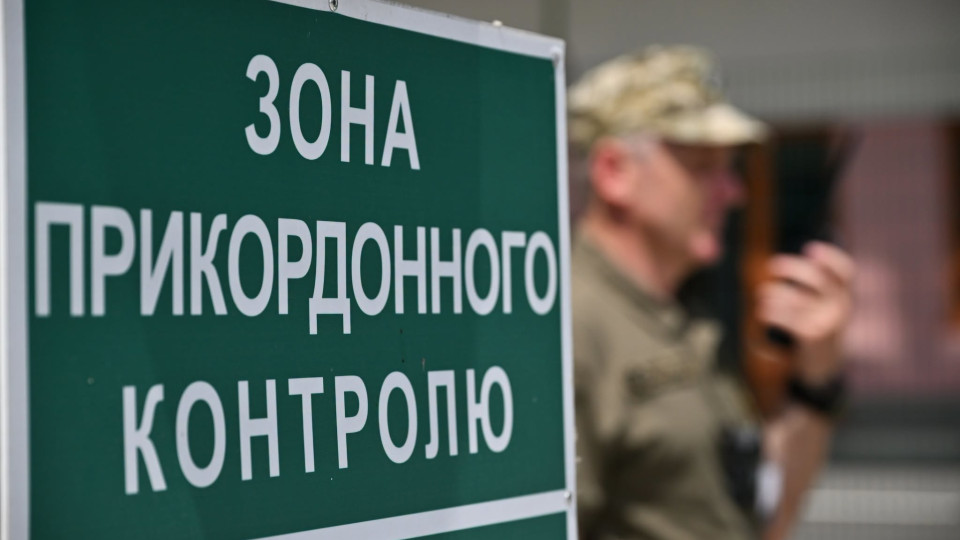










The issue of sentencing for crimes related to the illegal smuggling of persons across the state border has become particularly relevant after the introduction of martial law.
The Criminal Cassation Court as part of the Supreme Court, in the ruling dated June 16, 2026, in case № 153/1184/25, considered the issue of sentencing for illegal smuggling of a person across the state border of Ukraine and the application of circumstances that mitigate or aggravate punishment, as well as the scope of case review by the appellate court.
Circumstances of the case
The Yampil District Court of Vinnytsia region found the accused guilty of committing a criminal offense under part one of Article 332 of the Criminal Code of Ukraine and sentenced him to three years of imprisonment. At the same time, the court applied the provisions of Article 75 of the Criminal Code of Ukraine and released the convicted person from serving the sentence with probation.
The courts established that on July 4, 2025, during the period of martial law, the convicted person together with another individual was in a forest near the state border of Ukraine with the Republic of Moldova. They were moving towards the Dniester River intending to cross the state border outside a checkpoint by swimming but were detained by officers of the State Border Guard Service of Ukraine.
The Vinnytsia Court of Appeal reviewed the verdict only in terms of the imposed sentence. The court concluded that there were no grounds for applying Article 75 of the Criminal Code of Ukraine, canceled the verdict in this part, and imposed a real sentence of three years imprisonment. In other parts, the verdict remained unchanged.
In the cassation appeal, the defense argued that the appellate court committed significant violations of criminal procedural law, incorrectly applied criminal law, unjustifiably recognized the use of martial law conditions as an aggravating circumstance, did not consider the presence of a minor child as a mitigating circumstance, and unjustifiably refused to apply Article 75 of the Criminal Code of Ukraine.
Position of the Supreme Court
The Supreme Court pointed out that the incriminated criminal offense was committed during the legal regime of martial law introduced in Ukraine and, consequently, during the prohibition of exit from the country for Ukrainian men aged 18 to 60.
The court noted that although the defense presented a version that the attempt to cross the border outside the checkpoint was not related to the mentioned prohibition, it did not provide any explanation as to why two men were moving through the forest near the state border instead of crossing it through a checkpoint.
Moreover, the defense's references to possible deferment from mobilization, permission to leave the country, or not falling under the list of men prohibited from leaving the country do not correspond with his actions in attempting to cross the state border outside the checkpoint and are not supported by any evidence.
The Supreme Court supported the appellate court's conclusion regarding the presence of a minor child of the convicted. The Supreme Court indicated that this circumstance was known to the court and was taken into account when sentencing as a characteristic of the convicted person.
The court formulated a key legal position regarding the use of martial law conditions as an aggravating circumstance.
The Supreme Court emphasized that there is no doubt that persons illegally smuggling men of conscription age across the state border of Ukraine outside checkpoints actually use the conditions existing in the country due to the introduction of martial law.
It is precisely during martial law that a special regime is introduced, under which certain categories of citizens face restrictions on leaving the country. The existence of such restrictions creates demand for illegal border crossing services.
The Supreme Court noted that during martial law, the workload on the border service personnel has obviously increased, as they simultaneously perform tasks to counter sabotage threats, ensure proper control over the movement of persons and goods across the state border, and are forced to detect and stop attempts of illegal border crossing, the demand for which has increased dozens of times.
The court decided that considering that part of the border service resources is involved in defense tasks, the conditions of martial law, in which the number of acts related to illegal crossing of the state border has significantly increased, obviously contribute to the commission of criminal offenses under Article 332 of the Criminal Code.
In view of this, the Supreme Court concluded that the appellate court's verdict is lawful and reasonable, meets the requirements for it, and was adopted in accordance with the provisions of parts 1 and 2 of Article 420 of the Criminal Procedure Code.
Thus, the court left the appellate court's verdict unchanged, denied the defense's cassation appeal, and confirmed that during the illegal smuggling of men of conscription age across the state border, the conditions of martial law can be used to commit such a crime, and therefore their use can be recognized as an aggravating circumstance.
Also read: receiving remuneration for organizing illegal border crossing is a crime even without actual crossing — Supreme Court position.


Popular news