An employee of a critically important enterprise was illegally mobilized due to an error with the 'reservist' status: what the court decided


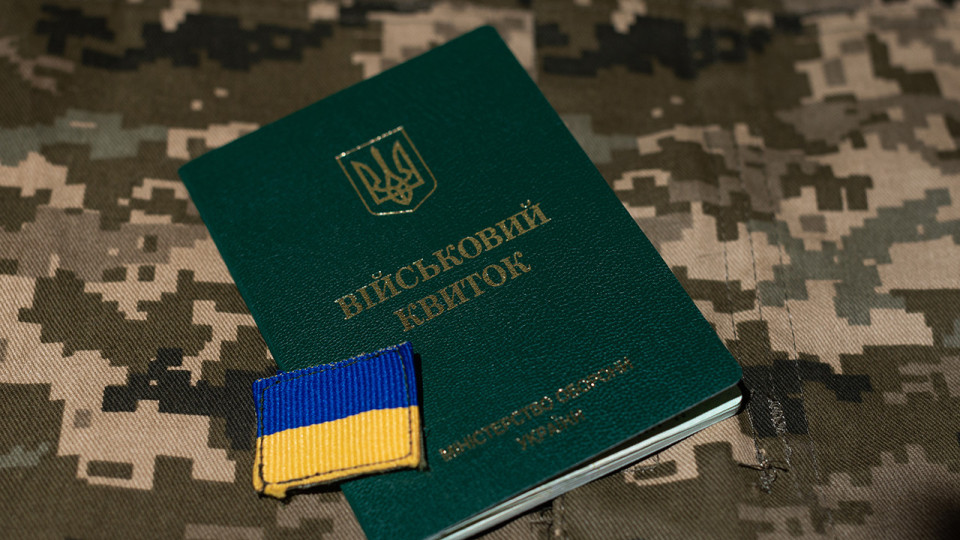










The Cherkasy District Administrative Court considered a case filed by a serviceman against the Territorial Recruitment and Social Support Center and a military unit regarding the recognition of the mobilization order as unlawful and its cancellation, as well as the obligation to release him from military service. The court concluded that the conscription was carried out with procedural violations due to an error by a state body during the reservation process, and therefore fully satisfied the claim.
Case essence
The plaintiff asked the court to recognize as unlawful and cancel the order of the head of the Territorial Recruitment and Social Support Center concerning his conscription during mobilization and his assignment to the military unit, as well as to oblige the military unit to issue an order for his dismissal from service and removal from the personnel list.
He justified his claims by stating that at the time of conscription, his employer had already started the procedure of reserving him as an employee of a critically important enterprise. According to the plaintiff, the mobilization became possible due to an erroneous entry in the Unified State Register of conscripts, reservists, and military liable persons, where he was mistakenly listed as a reservist. Because of this status, the enterprise was denied reservation, although in fact he was not in the military reserve. The plaintiff believed that this error was the basis for the illegal conscription and therefore the mobilization order should be canceled.
The representative of the Territorial Recruitment Center opposed the claim, noting that on the day of conscription the plaintiff had reached mobilization age, was declared fit for military service by the military medical commission, and did not have the status of a reserved person, and therefore was lawfully conscripted. The military unit also requested to dismiss the claim, stating that it was not authorized to assess the legality of the mobilization decision but only executed the order to enroll the serviceman in the personnel.
The court established that the plaintiff passed the military medical commission and was recognized as fit for military service. Following this, by order of the head of the Territorial Recruitment Center, he was conscripted during mobilization and sent to the military unit, where he was enrolled in the personnel and appointed as a driver-electrician of the unmanned aerial vehicle unit. The fact of military service was also confirmed by a certificate from the military unit.
Legal conclusions of the court
Examining the circumstances of case No. 580/1980/26, the court first noted that according to the Constitution of Ukraine, the Laws "On Military Duty and Military Service" and "On Mobilization Preparation and Mobilization," territorial recruitment and social support centers are military administration bodies responsible for conscripting citizens during mobilization and simultaneously obliged to verify grounds for deferral from conscription, including due to reservation of military liable persons.
The court noted that Article 23 of the Law "On Mobilization Preparation and Mobilization" provides that military liable persons who are reserved during mobilization and wartime and are on special military records are not subject to conscription during mobilization. The Territorial Recruitment Center is responsible for verifying grounds for deferral, issuing it, and maintaining special records of reserved persons.
During the case review, the court found that the plaintiff's employer — a company with the status of a critically important enterprise for the economy and population's livelihood during a special period — included the employee in the list of persons subject to reservation and submitted the relevant information through the "Diia" portal. However, the system refused the reservation because in the Unified State Register of conscripts, military liable persons, and reservists, the plaintiff was mistakenly listed as a reservist.
The court established that the state body itself confirmed in response to a lawyer's inquiry that during data entry into the register by the Territorial Recruitment Center operator, an error was made: the military liable person was mistakenly included in the territorial reserve. This technical error caused the refusal of reservation through the "Diia" portal and subsequently was the basis for his conscription during mobilization.
Assessing these circumstances, the court referred to the practice of the European Court of Human Rights, including decisions in the cases "Rysovskyi v. Ukraine," "Lelas v. Croatia," "Pinkova and Pink v. Czech Republic," "Gaši v. Croatia," and "Trgo v. Croatia." The court emphasized that the principle of good governance imposes on state bodies the duty to organize their activities to minimize the risk of errors. If errors are made by the state body itself, their negative consequences cannot be borne by the person whose rights were violated.
According to the court, the plaintiff's conscription became possible precisely because of unlawful actions by the Territorial Recruitment Center officials who made an error in maintaining the state register. Had the reservation been properly issued, the plaintiff would not have been subject to conscription during mobilization according to paragraph 1 of part one of Article 23 of the Law "On Mobilization Preparation and Mobilization."
At the same time, the court separately noted that it did not assess arguments regarding the legality of passing the military medical commission, as the commission's decision on fitness for military service was not subject to appeal in this case. Similarly, the court did not evaluate claims about the plaintiff's illegal detention, as such matters are outside the jurisdiction of the administrative court and can only be considered under criminal procedural law.
As a result, the court concluded that the legally established procedure was violated during conscription, and therefore the order of the head of the Territorial Recruitment Center regarding the plaintiff's mobilization and assignment to the military unit is unlawful and subject to cancellation.
The court also drew attention to the method of restoring the violated right. In its opinion, an unlawful decision of a government body cannot produce legal consequences. Therefore, although the commander of the military unit did not commit unlawful acts when enrolling the serviceman in the personnel, this enrollment was based on an illegal mobilization order. Consequently, the legal consequences of such an order must also be eliminated.
The court further noted that although Article 26 of the Law "On Military Duty and Military Service" does not explicitly provide for dismissal of a serviceman in case of illegal conscription, this does not deprive the court of the right to apply an effective means of protecting the violated right, guided by the principle of the rule of law. Any other means of protection would mean that the state body's error would be corrected at the expense of the person whose rights were violated.
In view of this, the Cherkasy District Administrative Court fully satisfied the claim: it recognized as unlawful and canceled the order of the head of the Territorial Recruitment Center regarding the plaintiff's conscription during mobilization, obliged the military unit to issue an order for his dismissal from military service and removal from the personnel list, and also recovered the court fee paid in his favor.
Subscribe to our Telegram channel t.me/sudua and to Google News SUD.UA, as well as to our VIBER and WhatsApp, Facebook page and Instagram to stay informed about the most important events.