Khrushchyovka Remodeling: Which Walls Cannot Be Touched Even During Major Renovations


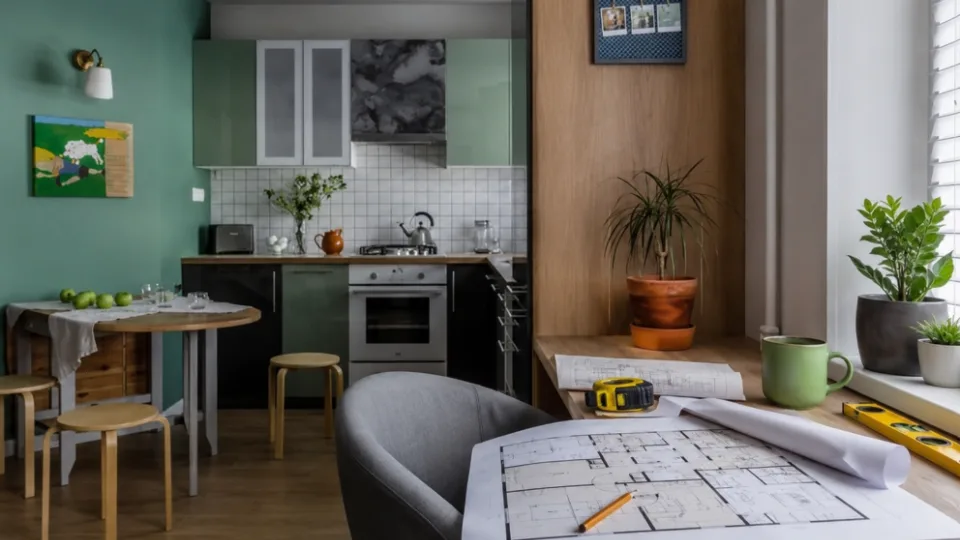










The desire to make a Khrushchyovka more spacious often ends with a major renovation. However, not all changes in the apartment are allowed by law. Unauthorized demolition of walls, relocation of the bathroom, or interference with ventilation can not only threaten the safety of the building but also result in fines, problems during the sale of the property, or inheritance processing.
The idea to remodel a Khrushchyovka arises for many apartment owners. A small kitchen, narrow corridor, and cramped bathroom often prompt radical changes. At the same time, not all works are safe and legal.
Unauthorized remodeling can lead to a fine. In addition, illegal changes can cause problems during the sale of the apartment, inheritance registration, or other notarial actions. When concluding any transaction, the notary checks the apartment's compliance with the technical passport. If the actual layout does not match the documents, the transaction may be refused.
Which walls cannot be demolished in a Khrushchyovka
The main rule during remodeling is not to interfere with load-bearing structures. They ensure the building's strength, so damaging them can pose a threat to all residents.
You can roughly determine the type of wall by its thickness:
- Partitions 8–12 cm thick are usually made of gypsum or wood and can be dismantled;
- Walls 25 cm thick or more are mostly load-bearing and must not be touched.
However, the final determination of whether a wall is load-bearing can only be made by the building's technical passport or after an expert's conclusion.
Moreover, Article 29 of the Law of Ukraine "On Regulation of Urban Development Activities" prohibits unauthorized interference with the building's structural elements.
Is it possible to enlarge the bathroom in a Khrushchyovka
One of the most common remodeling options is increasing the bathroom area at the expense of the kitchen or living room. However, this solution most often contradicts building codes.
State building codes B.2.2-15 "Residential Buildings" prohibit relocating so-called "wet zones" — bathrooms or toilets — above living rooms or kitchens of apartments located on the floor below.
Therefore, even high-quality waterproofing does not make such remodeling legal.
Is it possible to combine the kitchen with a room
Combining the kitchen with the living room remains one of the most popular remodeling options. However, if the apartment has a gas stove, there must be doors or a partition between the kitchen and the living room. This is a safety requirement.
In practice, apartment owners usually choose one of two options:
- replace the gas stove with an electric one;
- install sliding doors or a glass partition.
These solutions allow maintaining the open space effect without violating established requirements.
Why you cannot dismantle the ventilation shaft
It is strictly forbidden to dismantle ventilation ducts.
Ventilation in an apartment building works as a single system. Any interference can disrupt air exchange not only in your own apartment but also in neighbors' apartments.
That is why dismantling ventilation shafts is not allowed. If necessary, they can only be concealed with decorative structures or furniture without altering the system itself.
What changes can be made without permission
Despite restrictions, the law allows certain works without additional approvals.
In particular, you can:
- dismantle old built-in wardrobes and mezzanines;
- remove a light partition between the bathroom and toilet;
- move a door opening in a non-load-bearing wall;
- replace windows and heating radiators.
At the same time, it is recommended to document the apartment's condition with photos or videos before starting repairs. This can serve as additional evidence in case of disputes with neighbors regarding renovation works.
What else co-owners of an apartment should know
In Ukraine, many apartments are jointly owned — by spouses, relatives, or heirs. In such cases, remodeling or dividing the property often becomes a source of conflicts.
In practice, it is usually not about physically dividing the apartment but about determining the order of using rooms or assigning specific premises to each co-owner.
Actual division of the apartment is possible only if each part has a separate entrance and complies with building codes. In typical multi-apartment buildings, this is practically impossible.
That is why most disputes between co-owners are resolved not by remodeling or dividing the apartment but by defining the rules of using the property. If an agreement cannot be reached, the issue often has to be settled in court.
Subscribe to our Telegram channel t.me/sudua and to Google News SUD.UA, as well as to our VIBER and WhatsApp, pages on Facebook and Instagram to stay updated on the most important events.