What is known about Andy Burnham — the new Prime Minister of the United Kingdom


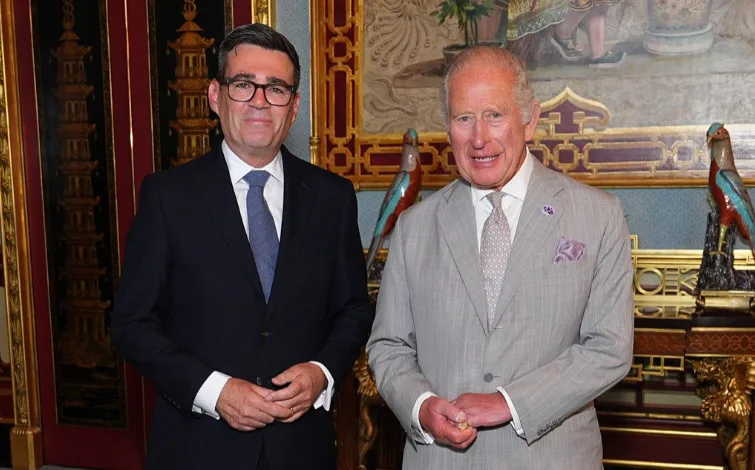










As is known, Andy Burnham officially became the Prime Minister of the United Kingdom on July 20. He replaced Keir Starmer in this position.
Burnham may not be very well known internationally, but the newly elected leader of the Labour Party is quite popular at home, writes NPR.
Who is Andy Burnham
The north-south class divide of England shaped his politics
Born and raised in northern England, Burnham moved to the generally more prestigious south to study English literature at Cambridge University, where one of his professors recalls how he wore a football kit to classes.
"I think this might be quite common on the streets of northwest England, but it is not necessarily a usual thing at a Cambridge college," said Professor John Mallan to the Times of London. He remembered young Burnham as a boy obsessed with football, who recited Shakespeare and dated "the coolest girl in college."
She was Marie-France van Hill, born in the Netherlands, and the couple is now married.
The football kit became an early example of working-class identity, which later defined Burnham in politics.
Burnham is 56 years old and often emphasizes his northern background and working-class roots. Analysts say his upbringing and time as Mayor of Greater Manchester — proud to be the birthplace of the working class in the world during the Industrial Revolution — shaped his nationwide politics.
This background may also help his center-left Labour Party regain working-class voters, some of whom have recently started voting for right-wing parties.
"I want to do everything possible to make the Labour Party once again a party that [people] can believe in, a party that firmly stands on the side of working-class people," Burnham told Britain’s Channel 4 News in May.
At first, Burnham struggled with stereotypes about northern football fans
Burnham was born in a Liverpool suburb to parents who worked as a telephone engineer and a registrar and grew up in a village roughly halfway between Liverpool and Manchester.
After graduating from Cambridge, he and van Hill stayed in the south, moving to London. Burnham was first elected to Parliament at age 31 for the Labour Party, representing a northern constituency.
He served as Secretary of State for Culture, Media and Sport in Prime Minister Gordon Brown’s government, and in 2009 he was sent to Liverpool to give a speech on the anniversary of the 1989 Hillsborough stadium tragedy, when nearly 100 football fans died due to overcrowding at a stadium in northern England.
This was the deadliest sporting disaster in UK history. However, the victims were initially labeled hooligans, and many survivors and families of the victims believed the government did not do enough to investigate.
The crowd initially booed Burnham. Holding back tears, he refused to deliver the prepared speech, nodding as the crowd chanted calls for justice.
"They were treated so badly, and [Burnham] was one of the first politicians who really listened," says Charlotte Wildman, a historian at Manchester University who studies the working class.
Burnham initiated a government inquiry that found the tragedy was caused by police errors, not the victims themselves. According to Wildman, this helped change the national stereotype.
"Especially northern working-class men were demonized. They were accused of violence, aggression, crime, and it was a very entrenched stereotype," she says.
This demographic group, which some believe has been left behind by globalization, ignored by politicians from the wealthier south where London is located — was convinced by Burnham’s work on Hillsborough.
Born in Liverpool, studied at Cambridge, but became famous for what he did in Manchester
As a Member of Parliament, Burnham ran twice for the leadership of the Labour Party.
In 2015, he was nominated by his parliamentary colleague and friend Keir Starmer. But both times he lost and eventually left Parliament after 16 years to return north.
In 2017, he was elected Mayor of Greater Manchester — it was there in local politics that he built his national reputation.
In the 1980s and 1990s, Manchester was known for two things: the decline of a post-industrial city and a vibrant independent music scene (with bands like The Smiths, New Order, The Stone Roses, and Oasis).
Burnham decided to fix the first and immerse himself in the second.
When Burnham took office, regeneration was already underway in Manchester, and he doubled these efforts, aiming to change the stereotype about his city just as he did with football fans.
He took control of city buses and persuaded the central government to devolve more powers over education and housing policy to cities like his.
"Regeneration — it was almost like marketing and branding!" notes Wildman. "Manchester used to have such a negative image. It was strongly associated with urban decline."
Today, Manchester’s skyline is filled with construction cranes. The canal district and former industrial warehouses have become an arts hub. There are glass skyscrapers that look more like Dubai than England. And Manchester now has one of the fastest-growing municipal economies in the UK.
Burnham promotes what he calls "Manchesterism" as a model of economic growth across the country. He says he will devolve power from the central government in London to cities and regions — and open a Downing Street office in the north.
"Imagine good growth in every postcode and hope in every heart. Let’s no longer imagine — let’s make it a reality," Burnham said in a keynote speech on June 29.
He also promises to lower tax rates for retail businesses, build the largest amount of public housing since World War II, and cut welfare spending in a way that is "fair and sustainable."
"'Manchesterism' for us is when people come together to make change, do things themselves, and have a real 'we can do it' attitude," says Rose Marley, CEO of Co-operatives UK, a federation of cooperative enterprises from Manchester. "Economically, Andy would call it the end of neoliberalism."
Marley worked as an advisor to Burnham when he was mayor. But she first met him on the city’s independent music scene — where Burnham moonlighted as a DJ.
She recalls that when he first arrived from London, he was "in a suit and all dressed up" and acted like a Westminster parliamentarian.
"But on the very first day he arrived, the tie was loosened, and that idea of a Westminster MP quickly disappeared!" Marley recalls. "Manchester style is sneakers and t-shirts! That’s when he started DJing."
Burnham became a national figure during COVID
When the pandemic began, the UK central government set quarantine restrictions based on local infection rates, and Manchester was subject to stricter restrictions than many other cities.
But the rules were often confusing.
In October 2020, Burnham accidentally held a live press conference when an aide handed him a phone with news of another lockdown — and the mayor angrily criticized the central government.
"This is not how to run a country during a national crisis. It’s not. It’s wrong," Burnham said, predicting that the restrictions would disproportionately hit low-paid working-class workers.
Burnham’s sharp reaction went viral, and he became a national hero in those dark, uncertain days of the pandemic, says Joshi Herman, founder of the Manchester news portal The Mill.
"He expressed helplessness, the feeling that maybe the government didn’t really understand what it meant to be in a place like Manchester. He really showed himself as a different kind of politician in this country," Herman recalls. "And I think without that moment, he wouldn’t have made it to Downing Street in the following weeks."
Andy Burnham and support for Ukraine
Andy Burnham plans to speak with Ukrainian President Volodymyr Zelensky on July 20 and tell him that the UK’s support for the country affected by war is "unwavering" and "resolute."
The new Prime Minister said that Zelensky and US President Donald Trump would be his "first calls" today.
"I will very clearly tell President Zelensky later today that, you know, nothing changes. I will be with him 100%, just as Keir Starmer was," he said.
Burnham said that in his previous role as Mayor of Greater Manchester over the past few years, he worked with Ukrainian mayors.
"I take all this experience with me into my new role, and President Zelensky will have no doubt that Britain’s support is unwavering, it is resolute, it will be with him, and I personally will also stand by him," he added.
Subscribe to our Telegram channel t.me/sudua and to Google News SUD.UA, as well as to our VIBER and WhatsApp pages, and on Facebook and Instagram to stay updated on the most important events.