Who Will Not Be Admitted to the National Pantheon and What Crimes Are Subject to Restrictions












Ukraine is preparing to launch a new large-scale project in the field of state memorialization – the Ukrainian National Pantheon. The corresponding draft law No. 15360 "On the Ukrainian National Pantheon" was submitted to the Verkhovna Rada by the President on June 28, 2026.
The initiative provides for the creation of a separate nationwide memorial complex in Kyiv, as well as a change in the approaches to honoring prominent Ukrainians – from selection criteria to the procedure for reburials and state ceremonies.
What is the Ukrainian National Pantheon
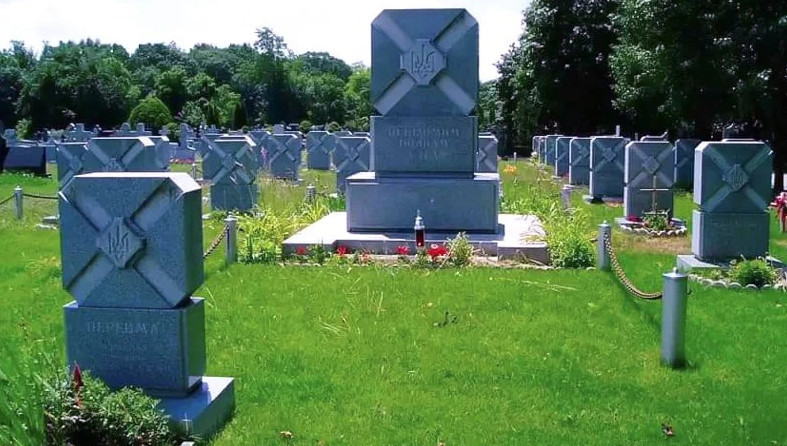
The draft law defines the Pantheon as a state memory space that will be in the exclusive ownership of the state and will not be subject to privatization or lease. Its main idea is to create a place where, at the national level, individuals who have made a significant contribution to the development of Ukraine, its independence, culture, science, military affairs, and public life will be honored.
It is envisaged that the Pantheon will become part of the state protocol. Official ceremonies may be held here, including the awarding of the highest state honors, as well as military burials with honors.
Who is proposed to be honored
The document defines a broad list of categories of persons who may be honored in the Pantheon. Among them: rulers of historical Ukrainian state formations – from Rus to the Ukrainian People's Republic (UNR), Western Ukrainian People's Republic (WUNR), the Ukrainian State, and Carpathian Ukraine; presidents of Ukraine (except those removed by impeachment); commanders-in-chief of Ukrainian military formations of various periods; leaders of the Armed Forces of Ukraine during the war for independence; persons who have made an exceptional contribution to state-building, defense, development of science, culture, arts, sports, language, and civil society; Nobel Prize laureates; world-class figures whose activities were connected with Ukraine.
Thus, it concerns not only military or political figures but also representatives of culture, science, and other fields.
Who will not be able to be honored
At the same time, the draft law provides clear restrictions. Persons who have been convicted of crimes against national security or crimes against peace, those subject to laws on decommunization and condemnation of totalitarian regimes, and those subject to restrictions under legislation prohibiting propaganda of the Russian totalitarian regime and Russian aggression will not be honored in the Pantheon.
In fact, this aligns the future memory system with the existing policies of decommunization and decolonization.
Conditions for reburial
A separate section of the draft law concerns reburials. It is envisaged that decisions will not be made automatically but only on the basis of specific grounds, including: if the burial site is under threat or in unsatisfactory condition, if it concerns state honoring at the highest level, or if the burial is located outside Ukraine.
The general rule is that reburial is possible no earlier than 20 years after death. In exceptional cases, this period may be shortened, but only based on the conclusion of a special advisory body. The consent of relatives remains mandatory. Without it, the procedure cannot be initiated.
Preliminary consideration will be carried out by a special collegial advisory body, which will include historians, scientists, experts, and public representatives. The final decision is proposed to be enshrined not by decrees or resolutions but by a law of Ukraine – meaning each case must be approved by the Verkhovna Rada.
Electronic format and state interaction
The draft law provides significant digitalization of processes: creation of an electronic register, use of the "Diia" platform and a special personal military accounting cabinet. It involves automated data exchange between state bodies, Territorial Recruitment and Social Support Centers (TRSSC), and other registers, as well as electronic submission of notifications about changes in accounting data. Annual data reconciliation between employers and TRSSC or relevant bodies is also established.
Legislative changes
The draft law on the Ukrainian National Pantheon provides for amendments to Article 20 of the Land Code of Ukraine, establishing a special legal regime for the use of land plots. In particular, it is proposed that the construction and operation of the Ukrainian National Pantheon will not require changing the land plot's designated purpose, land category, or functional use of the territory.
This exception will apply if the land plot is used as a special form of memorial, ceremonial, cultural-historical, aesthetic, educational, enlightening, recreational, or representative use of the territory.
The project proposes introducing a separate urban planning regime for the construction and operation of the Pantheon. According to the proposed amendments to Section V "Final Provisions," the placement of the Pantheon will be recognized as proper use of territories defined by urban planning documentation and will not require changes to such documentation solely due to its creation.
It is also envisaged that urban planning conditions and restrictions for designing Pantheon objects will be provided by the authorized urban planning and architecture body based on the results of an open international or nationwide architectural competition. These conditions will be determined according to a special law on the Pantheon and without regard to local urban planning documentation requirements.
Effectively, a separate legal regime is proposed for the Pantheon, differing from standard urban planning and land procedures.
The government is assigned a key organizational role: from defining the construction customer to approving the procedure for the architectural competition, state ceremonies, and forming the advisory body. The Cabinet of Ministers must also develop the Pantheon's operation procedure and ensure the regulatory framework is aligned with the new law.
What this means in practice
If the draft law is adopted, Ukraine will receive a new state memorialization system that unites historical figures of different eras – from the princely period to the present – in a single national memory space.
The project also changes the approach to state honoring: it becomes more formalized, legally regulated, and tied to parliamentary decisions. The final decision on the draft law will be made by the Verkhovna Rada during its consideration, and its provisions may still be amended.
Recall that "Judicial and Legal Newspaper" previously reported that President Volodymyr Zelenskyy announced the start of work on creating a Pantheon of outstanding Ukrainians.