Can a court demand collection of unpaid court fees after a final decision — the Supreme Court's position


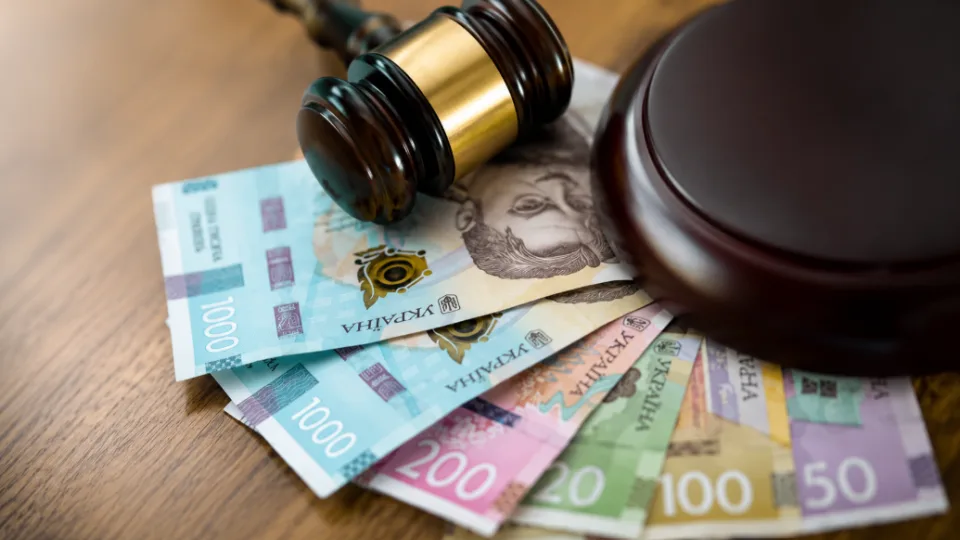










If during the consideration of a case the court did not use the mechanisms provided by the Commercial Procedural Code to control the correctness of the court fee payment, then after the decision on the merits is made, it can no longer collect the unpaid court fee by issuing an additional decision. The only exceptions are cases explicitly provided for in part 2 of article 163 of the Commercial Procedural Code of Ukraine, when the court during the case determines the real claim price due to obvious discrepancy in the value of the property or the impossibility to establish it at the time of filing the claim.
This conclusion was reached by the united chamber of the Cassation Commercial Court within the Supreme Court in the ruling dated June 19, 2026, in case No. 925/1421/20.
The court emphasized that the procedural consequences of a possible court error in checking the correctness of the court fee payment cannot be imposed on a party after the case is concluded. Such an approach would contradict the principles of legal certainty, finality of court decisions, and the rule of law.
Case circumstances
A financial company applied to the Commercial Court of Cherkasy region with a claim for recovery of real estate from unlawful possession and collection of over UAH 304 thousand in rent arrears.
In 2021, the court of first instance denied the claim.
Later, when the plaintiff appealed this decision, the Northern Appellate Commercial Court found that the court fee was not fully paid when filing the claim. According to the appellate court, instead of approximately UAH 74,000, about UAH 9,500 was paid, with an underpayment of UAH 64,571.81. At the same time, the appeal was returned due to failure to correct deficiencies, including non-payment of the required court fee for filing the appeal.
More than three years after the first instance decision, one of the defendants filed a motion for an additional decision. He requested to collect from the plaintiff to the State Budget of Ukraine UAH 64,571.81 of court fees which, in his opinion, were unpaid when filing the claim.
The Commercial Court of Cherkasy region granted the motion and by an additional decision collected the specified amount from the plaintiff to the state budget. The appellate court left this decision unchanged.
What the Supreme Court decided
The united chamber of the Cassation Commercial Court canceled the decisions of the previous instances and denied the motion for an additional decision.
The court explained that the Commercial Procedural Code provides an exhaustive list of mechanisms to control the correctness of court fee payment. If the court did not use them during the case consideration, after the decision on the merits it no longer has the right to collect unpaid court fees by issuing an additional decision.
The only exception is provided by part 2 of article 163 of the Commercial Procedural Code of Ukraine. It applies when during the case the court establishes that the claim price set by the plaintiff obviously does not correspond to the actual value of the disputed property or when it was impossible to determine the exact value of the property at the time of filing the claim. In such a case, the court may preliminarily determine the amount of the court fee and after establishing the real claim price collect the unpaid amount, including by issuing an additional decision.
In case 925/1421/20, such circumstances were absent. The court of first instance, when deciding on the merits, did not establish any discrepancy between the claim price and the actual property value and did not apply the mechanism provided by part 2 of article 163 of the Commercial Procedural Code. Only after the case was concluded did the appellate court note the incorrect calculation of the court fee.
The procedural obligation to pay the fee is considered terminated
The united chamber formulated another fundamental conclusion. If the plaintiff did not pay the court fee in full, but the court did not detect this before the decision on the merits and did not apply the procedural control mechanisms provided by law, the plaintiff's procedural obligation to pay such court fee should be considered terminated.
The Supreme Court explained that in such a case it is presumed that the court, without recalculating the court fee based on the real claim price, effectively determined its final amount. Accordingly, the plaintiff should not bear responsibility for a possible court error.
Legal conclusion of the Cassation Commercial Court of the Supreme Court
The united chamber formulated a legal conclusion regarding the application of paragraph 3 of part 1 of article 244 of the Commercial Procedural Code of Ukraine in connection with articles 163, 174, and 176 of the Commercial Procedural Code of Ukraine.
The court noted that after the completion of the relevant proceedings, the court of first, appellate, or cassation instance has no right, either at the request of a party or on its own initiative, to collect unpaid or underpaid court fees to the State Budget of Ukraine for filing a claim, appeal, or cassation complaint, unless the grounds provided by part 2 of article 163 of the Commercial Procedural Code of Ukraine exist. This approach ensures compliance with the principles of legal certainty, finality of court decisions, rule of law, and proportionality of commercial proceedings.
The Supreme Court also noted that in this case the motion for an additional decision was filed by a defendant who in fact requested collection of funds to the State Budget of Ukraine. According to the court, thus the defendant filed the motion in the interests of the state outside the scope of representation, although the Commercial Procedural Code of Ukraine provides for court applications in the interests of the state only in cases defined by law.
Subscribe to our Telegram channel t.me/sudua, Google News SUD.UA here, as well as our VIBER and WhatsApp, Facebook page and Instagram page to stay updated on the most important events.