Sunscreen in Summer: 8 Mistakes Almost Everyone Makes


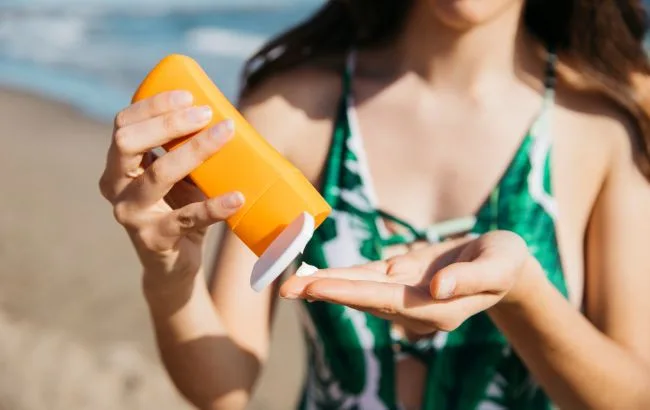










Sunscreen is used not only during beach vacations. According to dermatologists, ultraviolet radiation affects the skin in everyday life as well: in the city, on cloudy days, and even during car trips. Therefore, experts recommend using SPF products to protect against sunburn, photoaging of the skin, and to reduce the risk of diseases related to ultraviolet exposure.
However, most people use sunscreen incorrectly. Here are the most common mistakes.
1. Applying sunscreen only at the beach
Many Ukrainians use SPF exclusively during vacations by the sea or pool. In reality, ultraviolet rays are active all year round.
UVA rays, which are responsible for photoaging of the skin, penetrate even through clouds and glass. They can affect the skin during city walks, working near a window, or driving a car.
2. Using too little cream
One of the most typical mistakes is applying only a few drops.
For effective protection, an adult needs approximately:
- about 30–35 ml of cream for the whole body (approximately the volume of a shot glass);
- for the face and neck — about half a teaspoon or the rule of two stripes of cream applied to the index and middle fingers.
If less is used, the actual level of protection will be significantly lower than indicated on the packaging.
3. Applying SPF already under the sun
Sunscreen does not start working instantly.
Chemical (organic) filters usually need about 15–20 minutes after application to form proper protection. That is why it is recommended to apply the cream at home before going outside.
4. Not reapplying protection
There is a common belief that SPF only needs to be applied once a day.
In fact, most sunscreens need to be reapplied:
- every two hours while staying in the sun;
- after swimming;
- after intense sweating;
- after towel drying.
Even water-resistant cream does not provide unlimited protection.
5. Thinking that SPF 100 completely blocks the sun
No sunscreen provides 100 percent protection.
Approximately:
- SPF 30 blocks about 97% of UVB rays;
- SPF 50 — about 98%;
- SPF 100 — approximately 99%.
The difference between SPF 50 and SPF 100 is much smaller than it seems, so proper application and regular reapplication of the cream are more important.
7. Using expired cream
Sunscreen filters gradually lose their effectiveness.
If the cream is:
- expired;
- stored for a long time in a hot car;
- changed in smell, color, or consistency,
its protective properties may be significantly reduced.
8. Believing that dark skin does not need protection
People with darker skin do indeed get sunburns less often, but they are also affected by ultraviolet radiation.
Photoaging, pigmentation, and the risk of developing skin cancer do not disappear because of darker skin color.
For everyday use, most dermatologists recommend sunscreen with an SPF of at least 30, and for prolonged exposure to open sun — SPF 50+ with broad-spectrum protection.
Special attention to sun protection should be given to children, people with fair skin, many moles, as well as those taking medications that increase sensitivity to sunlight.
Subscribe to our Telegram channel t.me/sudua and to Google News SUD.UA, as well as to our VIBER and WhatsApp, our page on Facebook and on Instagram to stay updated on the most important events.