Electronic summons via Reserve+: is a conscripted person obliged to appear at the Territorial Recruitment Center


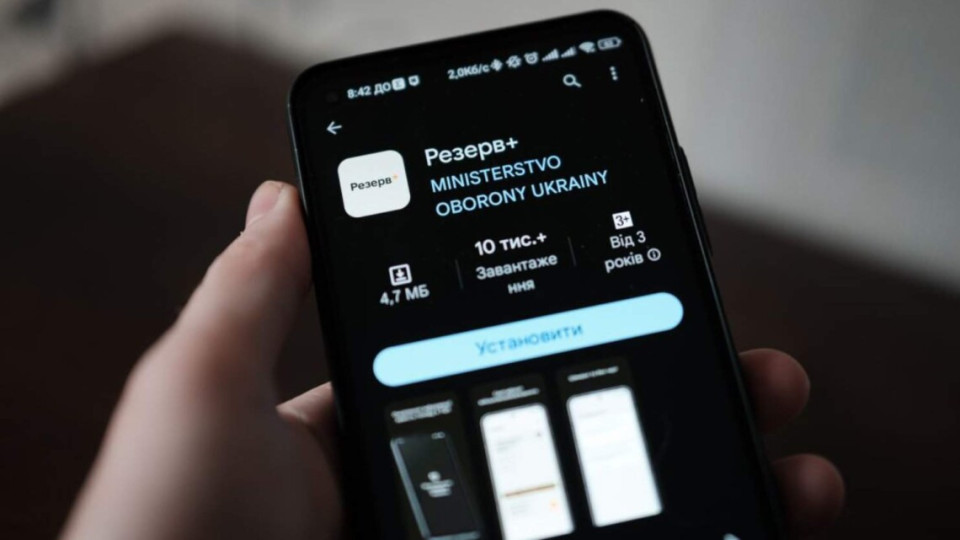










After the reform of the military registration system, Ukraine has effectively transitioned to a model of digital interaction between the state and conscripted persons. An electronic cabinet for conscripts has appeared, electronic deferrals, electronic referrals to the Military Medical Commission (MMC), and other online services have started operating.
Along with the development of digital tools, one of the most debated topics has emerged — electronic summons. Media regularly report on the alleged start of their mass sending through "Reserve+", and in society, the belief is formed that any notification in the app automatically creates a legal obligation to appear at the Territorial Recruitment Center (TRC).
However, current legislation and judicial practice indicate that the situation is much more complex.
What is the electronic cabinet of a conscripted person
The electronic cabinet of a conscripted person operates through the "Reserve+" app and is integrated with the "Oberig" registry. Its main purpose is to provide access to information about military registration, update personal data, process certain services, and receive information about one's status.
As of today, the following have already been implemented through digital services:
- updating registration data;
- obtaining an electronic military registration document;
- processing certain types of deferrals;
- submitting a request for an electronic referral to the MMC;
- access to information from the conscript registry.
Thus, the digital cabinet has already become a full-fledged element of the military registration system.
Are electronic summons provided for by law
This question causes the most controversy.
During 2025–2026, information about the introduction of electronic summons via "Reserve+" was repeatedly spread in the public space. At the same time, the Ministry of Defense officially denied reports that such a system has already started operating or that summons are being mass sent through the app.
Meanwhile, legislative initiatives have been registered in the Verkhovna Rada (bills No. 15233 and No. 15234, No. 15235, No. 15236, No. 15237) that foresee further digitalization of mobilization procedures, including the possibility of electronic delivery of documents and recording the fact of their receipt. However, the registration of a bill does not mean it has come into force, so it is important to distinguish current norms from legislative initiatives and information spread in the public space.
Today, "Reserve+" is undoubtedly an official electronic state service. However, the presence of a notification in the app does not automatically create all the legal consequences that the law currently associates with proper delivery of a summons.
The legal significance lies not in any informational message, but only in the method of notification explicitly defined by law.
How a summons is considered delivered today
The issue of summons delivery is primarily regulated by the Law of Ukraine "On Military Duty and Military Service", the Law of Ukraine "On Mobilization Preparation and Mobilization", the Procedure for organizing and maintaining military registration of conscripts, conscripted persons, and reservists approved by the Cabinet of Ministers of Ukraine Resolution No. 1487 dated December 30, 2022, as well as the Procedure for conscription of citizens for military service during mobilization approved by the Cabinet of Ministers of Ukraine Resolution No. 560 dated May 16, 2024.
These normative acts define who has the right to deliver summons, the method of calling to the TRC and Social Support, and when a person is considered properly notified.
According to part ten of Article 1 of the Law of Ukraine "On Military Duty and Military Service", citizens registered for military service are obliged to comply with military registration rules and appear upon the call of territorial recruitment and social support centers.
Article 22 of the Law of Ukraine "On Mobilization Preparation and Mobilization" additionally imposes on conscripted persons the obligation to arrive at the TRC and Social Support within the terms specified in the summons or other call documents.
Procedure No. 560 establishes that the call of reservists and conscripted persons during mobilization is carried out by delivering or sending a summons.
At the same time, the legislation no longer links the call procedure exclusively to personal delivery of the document. The summons may be delivered personally by authorized representatives of the territorial recruitment and social support centers, local self-government bodies, enterprises, institutions, or organizations in cases provided by law. It may also be delivered at the place of work, study, residence, or other locations where the conscripted person is present.
Sending summons by mail has gained particular importance after legislative changes. According to paragraph 34 of the Procedure approved by CMU Resolution No. 560, a summons may be sent by registered mail with a delivery notification.
At the same time, paragraph 41 of this Procedure provides that a summons is considered delivered not only upon receipt but also in case of refusal to accept or absence of the person at the address. Thus, legislation increasingly focuses on the principle of proper notification rather than actual delivery.
Therefore, today the key factor is not so much the fact of physical receipt of the summons but the compliance of the state body with the established procedure for sending it. This approach already influences judicial practice, where more often the question is not whether the person read the document, but whether the legal requirements for proper notification were met.
Judicial view
In the ruling dated October 23, 2024, in case No. 380/2838/24, the Supreme Court stated that a summons is only a means of notifying a citizen about the need to fulfill military duty established by law and therefore cannot be an independent subject of judicial appeal. The court emphasized that the obligation to appear at the territorial recruitment and social support center arises not from the summons but directly from the Law of Ukraine "On Military Duty and Military Service".
At the same time, judicial practice shows that decisions and actions of the territorial recruitment and social support centers, which directly affect the rights of a person, such as decisions on mobilization, denial of deferral, results of the MMC, rulings on administrative liability, or other individual acts, may be subject to appeal, not the summons itself.
A notable case is No. 401/781/26, where the court canceled a 17,000 UAH fine imposed by the TRC for failure to appear upon summons. The court noted that according to paragraph 41 of Procedure No. 560, the fact of proper notification must be confirmed by legally defined evidence, including a signature of receipt, video recording of delivery, or postal operator documents. Since the TRC failed to prove the fact of summons delivery or proper notification of the call, the court found the administrative offense absent and canceled the fine ruling.
Another interesting decision is in case No. 420/42974/25, where the court recognized as unlawful the entry into the "Oberig" registry of information about a conscript's violation of military registration rules. The court established that the person timely updated their data through the electronic cabinet, but the TRC did not prove the fact of proper summons delivery or sending to the current address.
The court reached a similar conclusion in case No. 560/3460/26. The court recognized as unlawful the entry into the "Oberig" registry of information about military registration violations because the TRC did not provide proper evidence of summons delivery or sending. In particular, the case materials lacked delivery notifications, enclosure descriptions, receipt signatures, and other evidence of proper notification, which became grounds for excluding the relevant information from the registry.
Thus, judicial practice demonstrates two key approaches: the summons itself is not a decision subject to appeal, but the TRC is obliged to prove the fact of proper notification of the person about the call.
What remains debatable
Despite the digitalization of military registration, the procedure for sending electronic summons still requires additional regulation.
In particular, the legislator must determine how the fact of message receipt will be confirmed, whether delivery to the electronic cabinet will be sufficient, and what consequences technical failures will have. These issues may become the subject of future court disputes.
Thus, the digitalization of military registration in Ukraine has already become a reality. The electronic cabinet of the conscripted person and the "Reserve+" app are gradually becoming the main channel of interaction between the citizen and the state in the field of military duty.
At the same time, claims about the full functioning of the electronic summons system currently outpace existing legislation. A significant part of the relevant mechanisms remains the subject of legislative initiatives or public discussions.
Subscribe to our Telegram channel t.me/sudua and to Google News SUD.UA, as well as to our VIBER and WhatsApp, Facebook page and Instagram account to stay informed about the most important events.