Over 70% of participants in court proceedings consider court decisions lawful — Stanislav Kravchenko


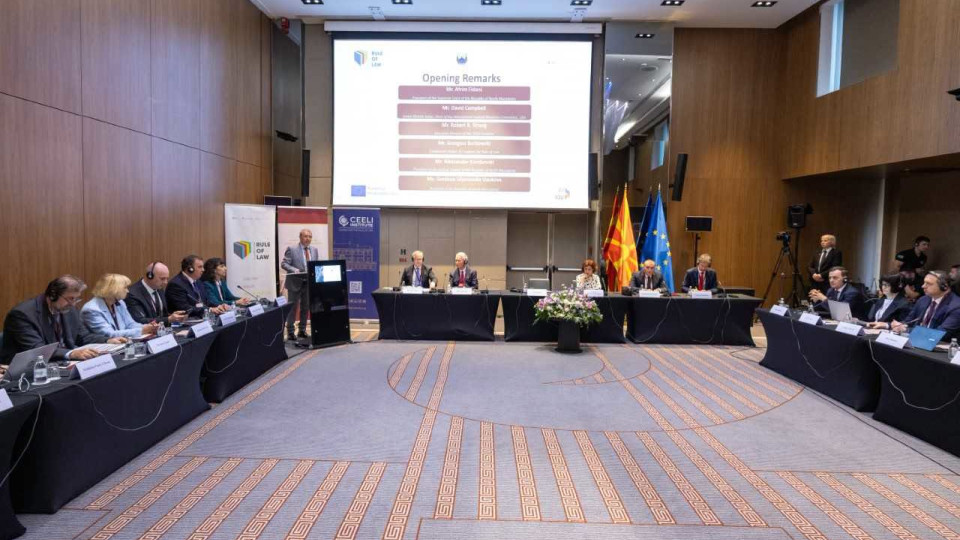










The true indicator of the success of the judicial system is not only the quality of court decisions but also the level of public trust. This was emphasized during the first session by participants from countries at the annual Conference of Heads of Supreme Courts of Central and Eastern European countries, organized this year by the Supreme Court of the Republic of North Macedonia and the "Legal Initiative in Central and Eastern Europe" Institute (CEELI Institute) in Skopje (Republic of North Macedonia).
In particular, participants from Central and Eastern European countries shared their own experience in holding open days, educational programs for schoolchildren and students, cooperation with journalists, and active use of social networks to promote the activities of the judiciary.
Joining the discussion, the Head of the Supreme Court Stanislav Kravchenko reported that according to a survey in Ukraine, over 70% of citizens who directly participated in court proceedings consider the decisions of Ukrainian courts lawful and justified. At the same time, the overall level of trust in the judicial system remains significantly lower. Therefore, Stanislav Kravchenko emphasized the need for proper analysis of statistical data and differentiation of survey results among different categories of respondents.
The Head of the Supreme Court paid special attention to issues of communication with society and the media. According to him, there is a significant gap between the actual activities of the courts and their public perception, which can only be overcome through systematic and professional communication.
The main topic of the second session of the conference was the modern challenges to judicial independence, including institutional independence, the role of judicial governance bodies, and issues of financial autonomy of the judiciary. In particular, the Head of the Supreme Court Stanislav Kravchenko positively noted the 2016 constitutional amendments and the increased role of the High Council of Justice in the process of appointing judges. At the same time, the current procedures for selecting judges in Ukraine are too complex and lengthy. The session also focused on preventing the use of disciplinary complaints as a tool for pressure on judges.
The third session concerned the use of the practice of European courts (the Court of Justice of the EU and the ECHR) at the national level in light of the principles of subsidiarity and complementarity in the interaction between pan-European and national courts. Among the challenges, representatives of judicial systems of Central and Eastern European countries highlighted problems with translating decisions of international courts and the need to ensure proper access for judges to up-to-date practice of international judicial institutions.
The Ukrainian experience of implementing the practice of the European Court of Human Rights and the role of the Grand Chamber of the Supreme Court in reviewing court decisions after the ECHR established violations of the Convention for the Protection of Human Rights and Fundamental Freedoms was presented by Stanislav Kravchenko. He also mentioned a joint project of Ukraine, Romania, and Turkey on translating Court decisions into national languages: thanks to the efforts of the ECHR and the Supreme Court, a Ukrainian-language version of the ECHR Knowledge Exchange Platform now operates, which has contributed to the accessibility of knowledge about the Court's practice in Ukraine.
The fourth session of the conference discussed the current and prospective use of AI in judicial proceedings and court administration. Participants shared views that AI can significantly increase the efficiency of justice by automating certain processes, analyzing large volumes of information, and searching for relevant judicial practice. Moreover, pilot projects implementing AI elements in courts demonstrated increased speed of information processing and unification of judicial practice.
At the same time, when using AI tools, it is necessary to guarantee compliance with ethical standards, protection of personal data, and preservation of the decisive role of humans in making judicial decisions. Cybersecurity threats, risks of deepfakes, use of artificially generated evidence, and the need to develop new procedural approaches to evaluating such materials remain relevant.
During the final, fifth session "Public statements of judges on matters of public interest," the discussion focused on how courts should respond to challenges when their legitimacy, independence, or authority is questioned. Special attention was paid to crisis communication, working with journalists, and the need to prepare courts for informational challenges. As noted by Stanislav Kravchenko during the discussion, the judiciary must actively use mechanisms of timely communication, prepare full texts of decisions without delays, and promptly publish press releases explaining the motives of court decisions.
As a result of the conference, participants agreed that strengthening judicial independence, increasing public trust in justice, effective communication of the judiciary with the public, proper use of modern technologies, and consistent implementation of European legal standards remain priorities for the development of judicial systems in Central and Eastern European countries.
Subscribe to our Telegram channel t.me/sudua and to Google News SUD.UA, as well as to our VIBER and WhatsApp pages on Facebook and Instagram to stay informed about the most important events.