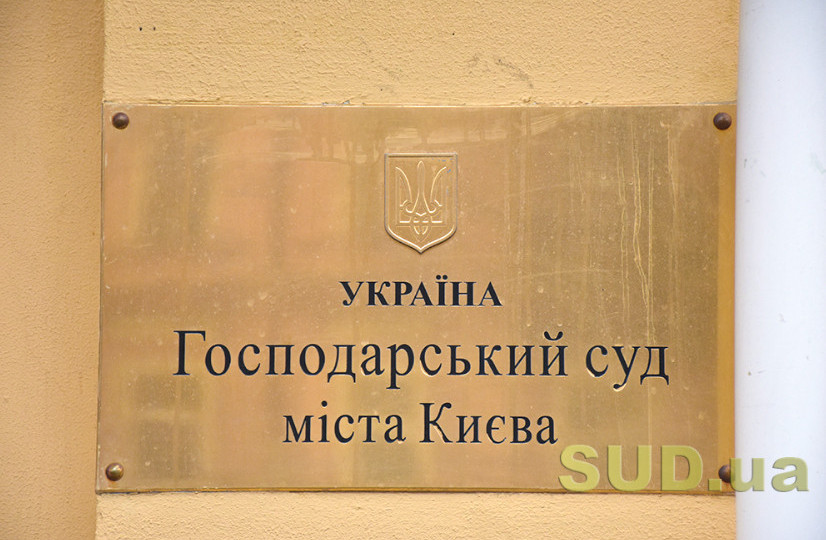
The Commercial Court of Kyiv is considering a dispute over claims against Sens Bank amounting to the equivalent of UAH 1.75 billion












The Kernel group, through the Cypriot company Etrecom Investments Limited, is trying to recover from the state-owned Sens Bank an amount equivalent to UAH 1.75 billion.
Currently, the Commercial Court of Kyiv is hearing case No. 910/4298/26 filed against the state joint-stock company "SENS BANK" and the Cypriot company Greatford Limited, initiated by the Cypriot firm Etrecom Investments Limited. A third party on the plaintiff's side in the process is one of the key assets of the Ukrainian agricultural holding — Kernel-Trade LLC. The Ministry of Finance of Ukraine is involved on the defendants' side.
The claims are based on obligations under LPN bonds issued by the Dutch company E.M.I.S. Finance B.V. This was reported by former editor of "Economic Truth" Serhiy Lyamets.
The plaintiff demands joint recovery from the defendants of $30.5 million principal and over $8.2 million in interest for late payment. Given the foreign element, the parties plan to apply the substantive law of England and Wales. In particular, Sens Bank has already submitted a detailed opinion from a well-known British King's Counsel (Jeffery Onions KC) to the case materials.
What is the essence of the dispute?
The claim was filed by Cypriot Etrecom Investments Limited, which is part of the Kernel group. The defendants in the case are the state-owned Sens Bank and Cypriot Greatford Limited. Formally, it concerns $39 million under LPN bonds issued by the Dutch E.M.I.S. Finance B.V. Kernel has already restructured this debt, with repayment scheduled for 2029.
According to the author, the real target of the claim is not Greatford, which effectively has no funds, but the state-owned Sens Bank. The money is demanded on bonds issued by the Dutch company E.M.I.S. Finance B.V. Bank representatives and financial analysts note that Kernel has already restructured this debt, and its scheduled repayment is only due in 2029.
As Serhiy Lyamets notes, the company demanded early recovery of funds. If the claim is satisfied, additional financial consequences may arise for the state bank. The final extent of such consequences will depend on the enforcement of the court decision and current legislation. Moreover, this could set a precedent for similar claims from other bondholders.
That is why the author calls the process a matter of state importance. The Ministry of Finance is already participating in the case as a representative of the state's interests — the owner of Sens Bank.
At the same time, any conclusions regarding possible financial consequences or the impact of the future decision on other legal relations are currently speculative and will depend on the final court ruling, which had not been made at the time of preparing this material.
Procedural nuances of the consideration
Before the case was accepted for proceedings, the plaintiff filed this claim twice, but the applications were not considered due to technical errors — failure to correct deficiencies in documents and issues with paying the court fee. After correcting the errors and resubmitting, the automated distribution system assigned the presiding judge.
Lawyers of Sens Bank tried to challenge the composition of the court due to the presiding judge's previous involvement in disputes involving agricultural holding enterprises in the Poltava region. However, the court denied the challenge, as the existence of such cases in the past is normal professional experience and specialization in commercial litigation, and the appointment was automatic and strictly procedural. The Cypriot defendant (Greatford Limited) attempted to disqualify the judge by filing a challenge. In the challenge statement, the defendant alleged possible procedural violations. The court found these arguments unfounded and referred the application for the judge's reassignment via automated distribution.
The court rejected Sens Bank's motion to hear the case by a panel of three judges. The case will continue to be heard by a single judge, as the court considers it not particularly complex and believes single-judge consideration will ensure reasonable timing.
Additionally, the court accommodated the plaintiff by extending the deadline to respond to the bank's reply. The Cypriot company needs time to engage its own foreign experts in English law for counterarguments. The state bank was correspondingly granted extended deadlines for objections.
As Serhiy Lyamets noted, the next hearing in the Kernel claim against Sens Bank is scheduled for June 30 at the Commercial Court of Kyiv.
Positions of the parties
The plaintiff insists on the existence of legal grounds to satisfy the stated claims.
The defendants, in turn, oppose the claim and consider the stated demands unfounded, referring, in particular, to the terms of debt restructuring and other circumstances which, in their opinion, exclude the possibility of early recovery.
The final legal assessment of these arguments will be given by the Commercial Court of Kyiv based on the substantive consideration of the case.
The editorial office is ready to provide all participants in the case with an opportunity to express their position and will publish relevant comments upon receipt.
Previous court experience in the holding's disputes
Analysis of previous court practice shows that decisions in similar commercial and land disputes involving Kernel structures have always been made within the law and were not one-sided:
Land dispute ("Prydniprovskiy Krai"): the court made a compromise decision — returned only half of the disputed land to the state (190 ha out of 393 ha), protecting community interests but not stopping the operation of a large enterprise.
Debt recovery ("Khorobor Agro"): recovery of funds in favor of the company within standard commercial law.
Lease ("Hovtva"): the court extended the lease of a 16 ha plot, guided by the preferential right of a bona fide tenant, consistent with stable Supreme Court practice.
In the dispute with "Ukrzaliznytsia," the court sided with the latter, but exercised the legitimate right to reduce the fines imposed on the enterprise by half. This is standard practice for commercial courts during martial law to avoid financial collapse of operating enterprises.
How English courts resolve disputes regarding Eurobonds
The practice of English courts in disputes over Eurobonds is based on the principle of contract interpretation. This means courts primarily analyze the text of contractual provisions and cannot go beyond them, substituting the parties' will with considerations of economic expediency or commercial fairness. Event of Default is not presumed; the creditor's right to early recovery must explicitly arise from the contractual documentation, and any disputed provisions are assessed primarily through the content of the relevant contractual terms.
This approach is established in the practice of the Supreme Court of the United Kingdom. In particular, in Arnold v Britton (2015), the court emphasized that the literal meaning of contractual provisions has primary importance, even if their application leads to an economically unfavorable result for one party. At the same time, in Wood v Capita Insurance Services Ltd (2017), the court clarified that contract interpretation is a process in which text and context are evaluated in relation to each other without automatic priority of either. In practice, especially regarding professionally drafted financial documents such as Eurobond documentation, the decisive factor is usually the contract text itself.
Therefore, when considering disputes over Eurobonds, English courts do not allow expansive interpretation of contractual provisions. If the terms of the securities issuance do not provide a specific mechanism for exercising creditor rights or do not define clear grounds for early debt recovery, the court generally refuses to supplement the contract with new provisions or go beyond the agreed terms. This approach ensures legal certainty and predictability in international financial legal relations, which is one of the key principles of English contract law.
Despite Serhiy Lyamets indicating that the current consideration may create a conflict of interest, an ordinary, albeit large-scale, corporate trial is underway. The court's position will be based on the analysis of debt restructuring documents, and the final verdict will show whether the state bank can prove the unfoundedness of the creditor's early claims.
At the time of publication, the case is at the stage of judicial consideration. The final decision in the dispute has not been made, and the circumstances presented in the material reflect procedural documents, the positions of the parties, and information from open sources. The editorial office does not draw conclusions regarding the legitimacy of any party's claims before the court decision comes into legal force.
Subscribe to our Telegram channel t.me/sudua and to Google News SUD.UA, as well as to our VIBER and WhatsApp, Facebook page and Instagram to stay updated on the most important events.